
If you’ve read enough about roof algae and Gloeocapsa Magma to know soft washing is the right method, the next logical question is whether you can just do it yourself. Buy a sprayer, mix a solution, spend a Saturday on it, and save the cost of hiring someone. It’s a reasonable thing to consider, and the honest answer is more nuanced than a flat yes or no. Here’s what actually goes into DIY roof soft washing, where the real risks are, and when it makes sense to call a professional instead.
The Short Answer
Technically, yes, soft washing a roof yourself is possible. Realistically, for most Lafayette homeowners, it carries more risk than it’s worth once you account for fall hazards, chemical handling, and the very real chance of damaging shingles, landscaping, or your own safety through a mistake that a professional roof cleaning crew is trained to avoid. Whether DIY makes sense for you depends heavily on your comfort with heights, your roof’s pitch, and how confident you are mixing and applying chemical solutions correctly.
What Soft Washing Actually Requires
Soft washing isn’t just spraying a hose with some dish soap in it. A proper soft wash involves a specific low-pressure application, typically under 300 PSI, combined with a biodegradable cleaning solution formulated to kill algae, moss, and mildew at the cellular level rather than just rinsing the surface. We break down exactly how this differs from pressure washing in our soft washing vs pressure washing guide, and understanding that distinction matters here too, because using the wrong equipment or pressure setting defeats the entire purpose of soft washing in the first place.
The Equipment You’d Actually Need
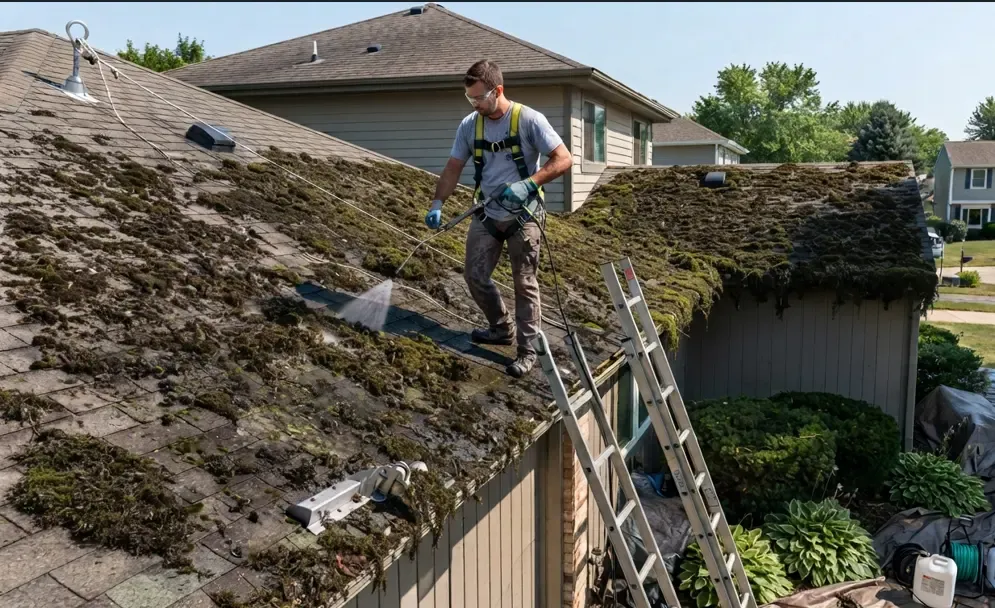
- A pump sprayer or soft wash system capable of regulating output below 300 PSI
- A properly diluted cleaning solution, usually a sodium hypochlorite base with a surfactant
- Fall protection equipment: harness, roof anchors, non-slip footwear
- Eye protection and chemical-resistant gloves
- Tarps or plastic sheeting to protect landscaping from runoff
- A stable extension ladder rated for the height of your roof
The Real Risks of DIY Roof Cleaning
Fall Risk
This is the single biggest danger, and it’s not hypothetical. Roofs are wet, sloped, and often covered in algae, which makes them slicker than they look from the ground. Falls from residential roofs are one of the most common causes of serious home DIY injuries, and steep-pitch roofs, common throughout Lafayette Parish’s older neighborhoods, dramatically increase that risk compared to a low-slope roof.
Chemical Handling Mistakes
Soft wash solutions typically contain sodium hypochlorite, essentially a concentrated bleach formula, mixed at a specific ratio for roof application. Too strong, and you risk damaging shingles, landscaping, or nearby metal fixtures. Too weak, and the solution won’t actually kill the algae at the root, meaning it regrows within weeks and you’ve done the whole job for nothing.
A soft wash solution that’s improperly mixed either fails to work or actively damages the surface it’s meant to protect. There’s very little margin for guessing.
Landscaping and Runoff Damage
Roof cleaning solution runs off the roof and down into your yard, gutters, and driveway. Without proper pre-rinsing and tarping technique, that runoff can burn grass, damage plants, and stain concrete if it isn’t diluted and directed correctly.
Shingle Damage From Improper Technique
Even with the correct low-pressure equipment, incorrect spray angle, holding the nozzle too close, or letting the solution dwell too long in direct sun can still damage shingles. Professional crews know how to adjust dwell time based on temperature, humidity, and roof material, something that’s difficult to judge correctly on a first attempt.
Warranty Complications
Most shingle manufacturers specify approved cleaning methods in their warranty documentation. A DIY job gone wrong, or even a correctly done one using an unapproved product, can create complications if you ever need to file a warranty claim for unrelated roof damage down the line.
When DIY Might Make Sense
DIY roof cleaning isn’t automatically a bad idea for everyone. It can be reasonable if:
- Your roof has a low, walkable pitch rather than a steep slope
- You have proper fall protection equipment and know how to use it
- You’re comfortable accurately diluting and applying a chemical solution
- The algae or moss growth is light rather than heavily established
- You have time to do it correctly rather than rushing through it in an afternoon
When You Should Call a Professional Instead
- Your roof has a steep pitch or multiple stories
- You’ve never handled roofing chemicals before
- The growth is heavy, dark, and has been building for years
- You want a warranty-safe guarantee on the work performed
- You’d rather bundle the job with gutter cleaning or house washing in a single visit instead of doing each separately over multiple weekends
DIY vs Professional: A Side-by-Side Look
| Factor | DIY | Professional |
|---|---|---|
| Upfront cost | Lower (equipment + solution) | Moderate, see typical roof cleaning cost in Acadiana |
| Fall risk | High, especially on steep roofs | Managed with proper safety equipment and training |
| Chemical dilution accuracy | Depends entirely on your research | Standardized and tested |
| Warranty safety | Uncertain, depends on product and technique | Typically follows manufacturer-approved methods |
| Time investment | Half a day to a full day | A few hours |
| Results longevity | Variable, depends on technique | Consistent, typically 18–36 months in Acadiana’s climate |
What Professionals Do Differently
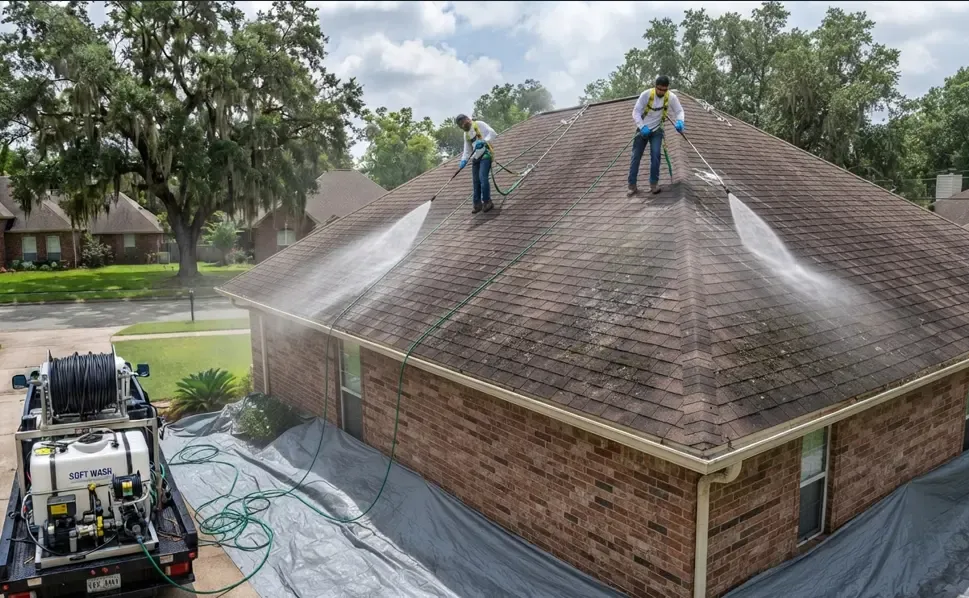
A trained soft wash crew isn’t just using better equipment, they’re making judgment calls throughout the job that come from experience: adjusting solution strength based on how established the Gloeocapsa Magma colony is, timing application around weather and direct sun exposure, and knowing how long to let the solution dwell before rinsing based on roof material and current humidity. These are exactly the variables that are hardest to get right on a first DIY attempt, and getting them wrong either wastes the effort or causes damage.
The Asphalt Roofing Manufacturers Association recommends professional-grade, low-pressure application specifically because consistent technique matters as much as the cleaning solution itself, something that’s difficult to replicate without hands-on experience.
A Middle-Ground Option: Light Maintenance Between Professional Cleanings
If cost is the main reason you’re considering DIY, there’s a middle path worth knowing about. Between full professional soft wash treatments, you can extend results by keeping gutters clear, trimming overhanging tree branches to reduce shade, and rinsing off surface debris with a garden hose at normal water pressure, none of which requires chemicals or climbing onto the roof itself. This kind of light maintenance won’t kill established algae, but it can slow regrowth and stretch the time between professional treatments.
Frequently Asked Questions
Is it safe to use bleach on a roof myself?
Diluted sodium hypochlorite is the standard active ingredient in professional soft wash solutions, but incorrect concentration or application can damage shingles, landscaping, or nearby metal fixtures, which is why accurate dilution ratios matter.
What PSI is safe for cleaning a roof?
Soft washing should stay under 300 PSI. Anything higher risks stripping the protective granule layer off asphalt shingles, regardless of whether you’re doing it yourself or hiring someone.
Can I soft wash my roof from the ground without climbing up?
For single-story homes with accessible rooflines, some ground-level application is possible with the right extension wand, though even then, uneven coverage and runoff control are harder to manage without direct roof access.
How long does DIY roof cleaning last compared to professional cleaning?
Results vary significantly based on technique. A correctly done soft wash can last close to what a professional job achieves, but inconsistent dilution or application often leads to faster regrowth.
Does DIY roof cleaning void my shingle warranty?
It depends on your manufacturer’s specific warranty terms and the product used. Some warranties require professional application or approved cleaning products to remain valid.
What’s the biggest mistake people make attempting DIY roof cleaning?
Using a standard pressure washer instead of a true low-pressure soft wash setup, which strips granules and damages shingles instead of safely treating the algae.
If steep pitch, chemical handling, or simply wanting it done right the first time has you leaning toward hiring it out, contact us for a free estimate. Most Lafayette homeowners hear back within a couple of hours.