
If you have ever stood in your driveway and noticed dark streaks running down your roof like someone spilled ink across the shingles, you have already met Gloeocapsa Magma. It is not mold. It is not soot from a chimney. It is a living organism that has quietly colonized more rooftops across Lafayette, Youngsville, Broussard and the rest of Acadiana than most homeowners realize. Understanding what it actually is, and why Louisiana’s climate practically rolls out the welcome mat for it, is the first step toward stopping the damage before it costs you thousands.
What Exactly Is Gloeocapsa Magma
Gloeocapsa Magma is a species of cyanobacteria, sometimes called blue-green algae, though it behaves more like a hardy colonial bacterium than a plant. According to the scientific record on the organism, Gloeocapsa magma first drew widespread attention as a roofing problem in the southeastern United States during the 1990s before spreading to most of the rest of the country. Its rise tracks closely with the industry shift toward asphalt shingles containing crushed limestone as a filler material.
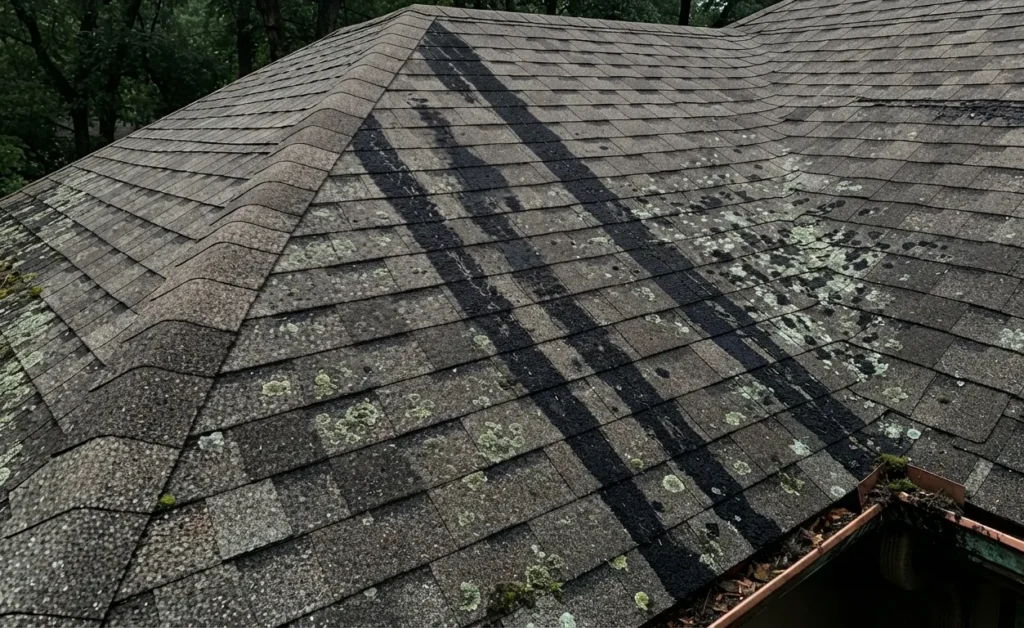
The organism feeds directly on that limestone filler. As it digests the calcium carbonate, it produces a dark, almost tar-like protective coating to shield itself from ultraviolet light. That coating is what you see as black streaking on a roof. It is not dirt sitting on top of your shingles, it is a living colony embedded into the granule surface, and that distinction matters because it explains why rinsing a roof with a garden hose never actually solves the problem.
Gloeocapsa Magma does not wash off. It has to be killed at the cellular level, or it regenerates within weeks.
How the Staining Pattern Forms
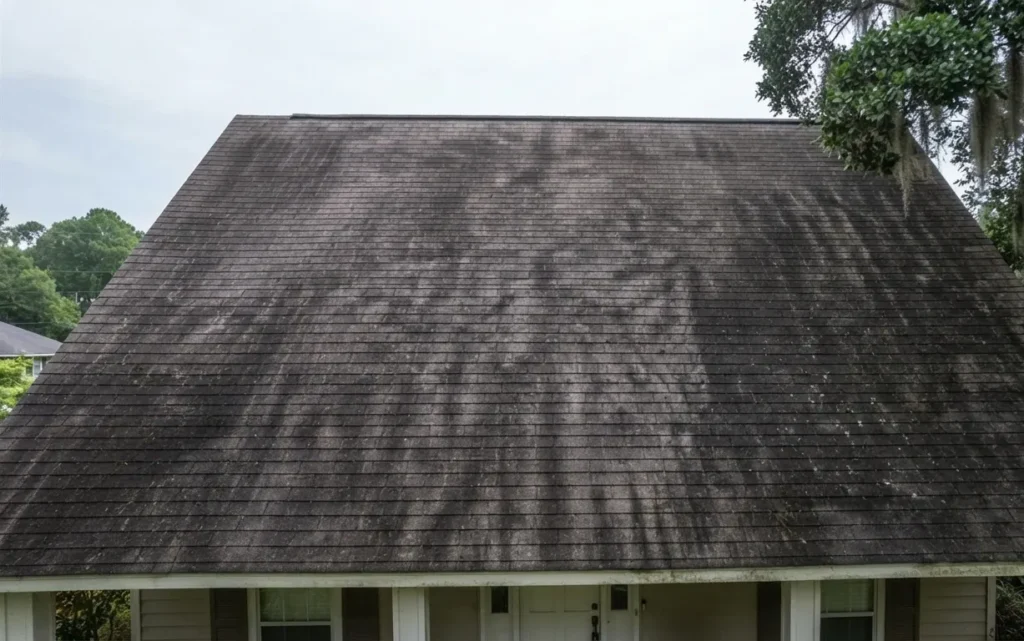
The streaking pattern you notice, usually running from the ridge line down toward the gutters on the north-facing or shaded slopes, follows the path of moisture and shade retention. Spores land, establish a colony, and as the colony matures it produces the dark biofilm in a directional pattern shaped by water runoff and prevailing wind. This is why two identical homes built by the same builder in the same subdivision can develop nearly matching streak patterns within a year or two of each other.
Why Gloeocapsa Magma Thrives Specifically in Louisiana
Every region of the country deals with roof algae to some degree, but Acadiana sits in one of the most favorable environments for this organism in the entire continental United States. Several overlapping conditions are responsible.
Year-Round Humidity
Lafayette rarely experiences a true dormant season. Humidity levels sit above 70 percent for most of the year, and that constant moisture is exactly what cyanobacteria need to stay active. In northern states, a hard freeze slows or halts algae growth for several months, giving homeowners a natural reprieve. Louisiana roofs get no such break.
Rainfall Volume
Southern Louisiana averages roughly 62 inches of rainfall annually, nearly double the national average. Frequent rain keeps roof surfaces damp longer between drying cycles, extending the daily window during which the organism can actively feed and reproduce.
Heat
Warmer surface temperatures speed up biological activity. Gloeocapsa Magma reproduces faster in warm, humid conditions than in cooler climates, which is part of why Acadiana homeowners often see visible regrowth within 18 to 24 months of a cleaning, compared to homeowners in drier or colder states who might go three to five years between treatments.
Tree Canopy Coverage
Lafayette Parish has dense coverage of live oak and pine trees, both of which create heavy shade on large sections of most roofs. Shade keeps shingles cooler and damper for longer stretches of the day, which favors algae growth over the sun-baked, quick-drying roof surfaces you would find in a more open, arid region.
Wind-Carried Spore Transfer
Cyanobacteria spores travel efficiently on wind currents. Once a colony establishes itself on one roof in a neighborhood, spores routinely spread to adjacent homes, which explains why entire streets in Youngsville or Carencro often develop staining within the same one to two year window, almost like a pattern moving block by block.
Growth Factors at a Glance
| Environmental Factor | National Average | Acadiana Conditions | Effect on Growth |
|---|---|---|---|
| Annual rainfall | 30 to 40 inches | Approximately 62 inches | Extended moisture exposure |
| Relative humidity | Seasonal variation | 70%+ year-round | No dormant period |
| Winter dormancy | 2 to 4 months | Rare or minimal | Continuous reproduction |
| Tree canopy shading | Varies by region | Dense oak and pine cover | Prolonged dampness |
| Wind spore transfer | Standard | High due to open subdivisions | Neighborhood-wide spread |
Why Gloeocapsa Magma Is More Than a Cosmetic Problem
Homeowners often assume black streaking is purely an appearance issue, something to fix before selling a house or hosting a family gathering. The biological reality runs deeper.
- Granule loss — as the colony feeds on the limestone filler, it gradually breaks down the protective granule layer that shields the asphalt base of the shingle from UV degradation.
- Heat absorption — dark biofilm absorbs significantly more solar heat than a clean shingle surface, which can raise attic temperatures and increase cooling costs during Louisiana’s long, hot summers.
- Shortened shingle lifespan — left untreated, an active colony can shorten a shingle roof’s functional life by an estimated 5 to 10 years, turning what should have been a 20-year roof into one needing replacement well ahead of schedule.
- Reduced resale value — a visibly streaked roof is one of the first things a home inspector or potential buyer notices, and it frequently becomes a negotiating point during a sale.
How to Tell Gloeocapsa Magma Apart From Other Roof Growth
It helps to know what you are actually looking at before deciding on a treatment plan.
- Black streaks running vertically from the ridge toward the eaves, usually on shaded or north-facing slopes, is almost always Gloeocapsa Magma.
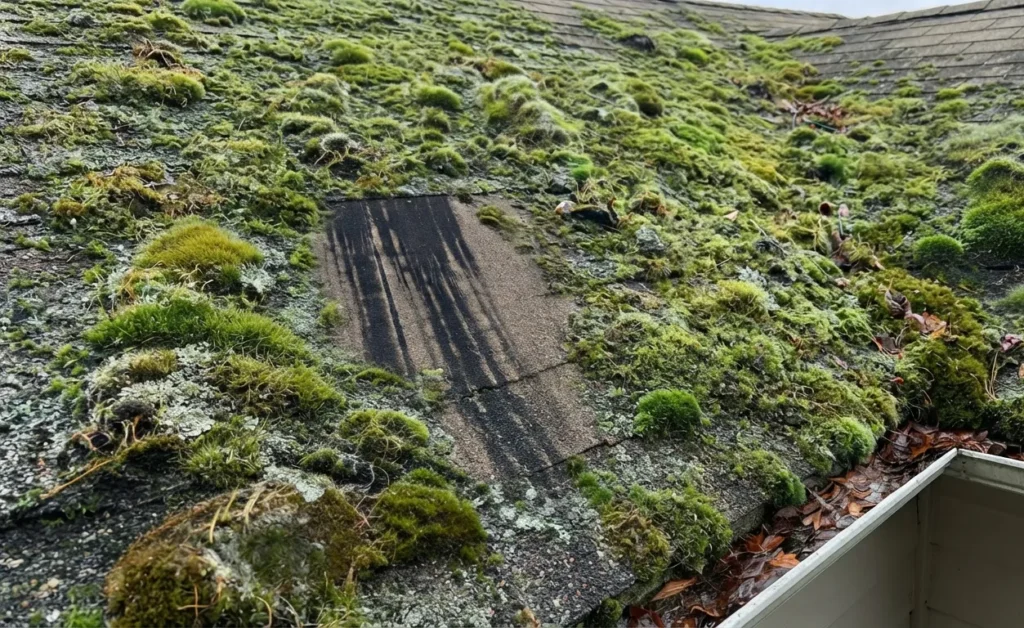
- Green, fuzzy patches with a raised, textured appearance are typically moss, which grows physical root structures called rhizoids into the shingle surface rather than a flat biofilm.
- Gray or white powdery patches are more likely to be lichen, a combination organism of fungus and algae that bonds tightly to the shingle surface.
- Dark, splotchy patches without a clear directional pattern, often near shaded valleys or debris buildup, may indicate mold or mildew feeding on organic matter like leaves and pollen rather than the limestone filler itself.
Each of these requires a slightly different treatment approach, which is why an accurate diagnosis matters before any roof cleaning work begins.
Why Pressure Washing Makes the Problem Worse, Not Better
A common instinct is to rent a pressure washer and blast the roof clean. This is one of the most damaging mistakes a homeowner can make. High-pressure water strips the protective granules directly off the shingle, which not only fails to kill the organism at the root but actively accelerates the exact granule loss that Gloeocapsa Magma was already causing. Most shingle manufacturers explicitly void warranty coverage when high-pressure washing is used, and the Asphalt Roofing Manufacturers Association recommends low-pressure, chemical-based soft washing as the only approved method for treating biological roof growth.
Soft washing applies a biodegradable cleaning solution at garden-hose level pressure. Rather than physically scraping the colony off, it penetrates the biofilm and kills the organism at the cellular level, which is why a properly soft-washed roof in the Acadiana climate typically stays clear for 18 to 36 months rather than regrowing within weeks the way a pressure-washed roof often does.
Can You Prevent Gloeocapsa Magma From Coming Back
There is no way to permanently algae-proof a roof in a climate as humid as Lafayette’s, but several factors extend the time between treatments.
- Trim overhanging tree branches to reduce shade and allow more direct sunlight onto the roof surface.
- Keep gutters clear so water drains properly instead of pooling and creating additional damp zones.
- Consider zinc or copper strip installation along the ridge line during a future reroof, since rainwater carrying trace metal ions across the shingle surface can slow regrowth.
- Schedule proactive treatment on a maintenance cycle rather than waiting until streaking is heavily visible, since early-stage colonies are faster and less costly to treat.
Most homeowners tackling the roof at the same time also take care of the rest of the exterior. A dirty roof rarely shows up alone, algae-heavy shade and humidity tend to leave siding streaked and driveways stained too, which is why we often pair roof treatment with house washing and driveway pressure washing in the same visit.
Frequently Asked Questions
Is Gloeocapsa Magma dangerous to breathe or touch?
Gloeocapsa Magma is not considered a significant health hazard to humans in typical outdoor exposure, unlike certain molds. The primary risk it poses is structural, through shingle degradation, rather than respiratory.
Why does my neighbor’s roof have the same black streaks as mine?
Because the organism spreads by wind-carried spores, homes in the same subdivision or wind corridor frequently develop nearly identical staining patterns within a similar timeframe.
Will a new roof stop Gloeocapsa Magma from growing?
No. New shingles still contain the limestone filler the organism feeds on. Algae-resistant shingles with embedded copper granules can slow the onset, but they do not make a roof immune, especially in a climate as humid as Louisiana’s.
How quickly does Gloeocapsa Magma spread once it appears?
Growth rate depends on shade, moisture and existing colony size, but in Acadiana’s climate, visible streaking can noticeably expand within a single humid season if left untreated.
Does cleaning remove the staining completely, or does discoloration remain?
A properly executed soft wash typically restores the shingle to its original color, since the treatment breaks down the biofilm rather than simply bleaching the surface.
If your roof is already showing the early signs of black streaking, contact us for a free estimate. Most Lafayette homeowners hear back within two hours, and same-week appointments are almost always available.