
Timing matters more than most homeowners realize when it comes to roof cleaning. Schedule it during the wrong season in Louisiana, and you’re either fighting hurricane season logistics, dealing with a solution that won’t dry properly, or paying for a job that gets undone by the next humid month. Here’s exactly when to schedule roof cleaning in Lafayette and across Acadiana, and why the calendar matters just as much as the cleaning method itself.
The Short Answer
The two best windows for roof cleaning in Louisiana are late winter through early spring (February to April) and fall (October to November). Both windows sit outside hurricane season, offer lower humidity than summer, and avoid the risk of freezing temperatures interfering with solution application. If you’re ready to schedule now rather than reading through the full breakdown, our roof cleaning team books appointments across both windows and can walk you through what fits your roof’s current condition.
Why Timing Actually Affects Roof Cleaning Results
Soft washing relies on a cleaning solution dwelling on the roof surface long enough to kill algae and moss at the root, then rinsing away cleanly. Extreme heat, heavy rain, or freezing temperatures all interfere with that process in different ways, which is why “any time works” isn’t really true in a climate as seasonally distinct as Louisiana’s. We cover the technical side of how this solution actually works in our soft washing breakdown, but the short version here is that weather conditions directly affect how well the treatment performs.
Season by Season: What Actually Works Best
Late Winter to Early Spring (February–April)
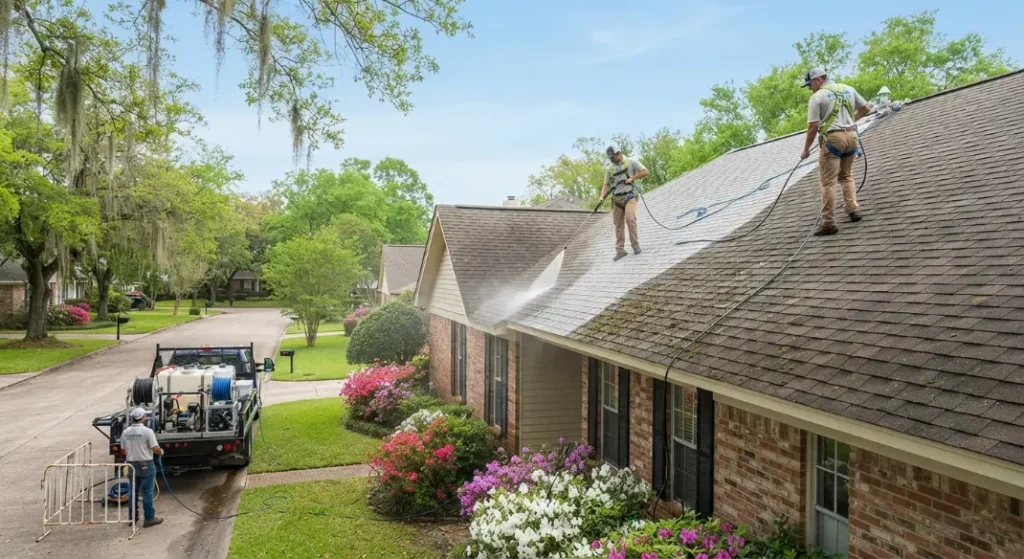
This window offers some of the most favorable roof cleaning conditions in Acadiana. Late February through April tends to bring milder temperatures, lower humidity, and less frequent rainfall compared to the extremes of summer, giving cleaning solutions time to dwell and work properly without being washed away by sudden downpours. It’s also well ahead of hurricane season, meaning your roof enters the riskiest months of the year already treated rather than already streaked and weakened. Climate Data
Cleaning your roof before hurricane season begins isn’t just about appearance, it’s about giving your shingles their strongest possible condition before the months when your roof faces the most stress.
Late Spring (May)
May sits in a gray zone. Temperatures are rising, and Louisiana experiences a pronounced rainy season in spring, driven by polar fronts colliding with moist Gulf air. Scheduling is still workable, but rainfall unpredictability means appointments occasionally need rescheduling around storm systems. Florida Climate Center
Summer (June–August)
This is the least ideal stretch for roof cleaning, for a few overlapping reasons. Summer brings hot, humid weather with afternoon showers and thunderstorms nearly every day from June through August, and hurricane season runs from June 1 through November 30, with peak activity in August and September. Intense heat can cause cleaning solutions to evaporate faster than intended, reducing dwell time and effectiveness, while daily storm risk makes scheduling unpredictable. It’s also simply harder and less safe for crews to work roofs safely in peak Louisiana heat. Lafayette TravelEducationdirectory
Fall (September–November)
Early fall still carries hurricane risk since peak season extends into September, but by October, conditions shift favorably. October and November bring mild temperatures, lower humidity, and less frequent rainfall, and autumn is typically the driest part of the year in the Lafayette area. This makes fall the second strongest window of the year, ideal for treating any algae or moss growth that built up over the humid summer months before winter sets in. Climate DataLafayette Travel
Winter (December–January)
Winter in Acadiana is mild by national standards, but not without risk. Lafayette does get occasional nights in the 30s and 40s, and averages about five days a year of sub-freezing weather. Cleaning solutions need adequate temperature to work effectively and dry properly, so scheduling around any forecasted freeze is important during this window, though most of December and January remains workable on milder days. Lafayette Travel
Quick Reference: Seasonal Roof Cleaning Conditions
| Season | Rainfall | Humidity | Hurricane Risk | Overall Rating |
|---|---|---|---|---|
| Feb–Apr | Low to moderate | Moderate | None | Excellent |
| May | Rising | Rising | None | Good, weather-dependent |
| Jun–Aug | High, daily storms | Peak humidity | Active, peak Aug–Sept | Poor |
| Sep | High | High | Peak risk | Poor |
| Oct–Nov | Low | Low | Tapering off | Excellent |
| Dec–Jan | Low to moderate | Low | None | Good, watch for freezes |
Why Waiting Until Late Summer Costs You More
A lot of homeowners notice roof staining mid-summer, when algae growth is at its most visible, and assume that’s when to book cleaning. In practice, this is the worst timing window. Not only are conditions harder to work with, but a roof left untreated through the most humid stretch of the year, then heading straight into hurricane season without a clean, protected surface, faces compounding stress. Roofs entering storm season already weakened by untreated algae and moss are more vulnerable to wind and water damage than roofs that were treated beforehand.
How Seasonal Timing Connects to Your Whole Exterior
Roof cleaning rarely happens in isolation from the rest of your home’s exterior. The same humidity and shade conditions that drive algae growth on your roof also affect your siding and gutters. Scheduling house washing alongside your seasonal roof cleaning means one crew visit handles both, and it’s worth doing during the same optimal windows, since siding cleaning benefits from the same mild, low-humidity conditions as roof work.
Gutters deserve particular attention around these seasonal windows too. Clearing them before hurricane season ensures proper drainage during Louisiana’s heaviest storm months, and clearing them again in late fall removes leaf debris before winter. Our gutter cleaning service is often booked as part of the same seasonal visit as roof cleaning for exactly this reason.
Building a Seasonal Maintenance Rhythm
Rather than treating roof cleaning as a one-time event triggered by visible staining, many Acadiana homeowners find it easier to build a repeating seasonal rhythm:
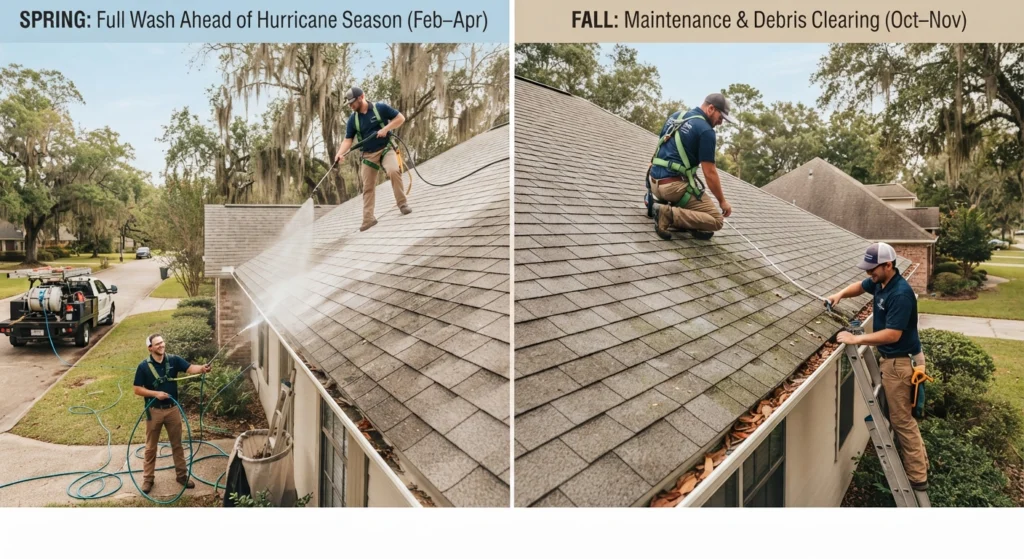
- February–April: Full roof soft wash ahead of hurricane season, paired with gutter clearing
- June–August: Monitor for storm damage, avoid scheduling major cleaning during this window
- October–November: Second cleaning if algae regrowth is visible, gutter clearing before winter debris buildup
- December–January: Light maintenance only, schedule around any forecasted freezes
Given how quickly algae regrows in Louisiana’s climate, a roof cleaned in spring often shows some regrowth by fall, which is part of why the two-window approach works better here than the single annual cleaning that works in drier states.
What If You Notice Heavy Growth Outside These Windows
Timing recommendations aren’t absolute rules. If your roof has heavy, established algae or moss growth, especially the kind that indicates advancing Gloeocapsa Magma colonization, waiting months for the “ideal” window isn’t always the right call. A professional crew can still clean effectively in less-than-ideal conditions, they simply adjust solution concentration and timing around the day’s specific weather rather than the general seasonal pattern. If growth is severe, it’s worth getting an assessment sooner rather than waiting for a specific month.
Industry Guidance on Timing and Method
The Asphalt Roofing Manufacturers Association doesn’t specify an exact calendar window for cleaning, but its guidance on proper soft wash application, adequate dwell time, controlled temperature conditions, and avoiding extreme weather during application, lines up closely with why late winter/early spring and fall consistently outperform summer scheduling in a climate like Louisiana’s.
Frequently Asked Questions
Can I get my roof cleaned during hurricane season if I need to?
Yes, though scheduling becomes less predictable due to storm risk, and crews may need to reschedule around active weather systems. If your roof needs urgent treatment, it’s still possible, just less ideal timing.
Does roof cleaning need dry weather immediately afterward?
Some dry time helps the solution finish working properly, but light rain shortly after typically isn’t a major issue since the solution has already penetrated the biofilm by that point.
How long after cleaning does regrowth typically start in Louisiana?
With proper soft washing, most Acadiana roofs stay clear for 18 to 36 months, though the humid summer months tend to accelerate any early regrowth compared to drier climates.
Is spring or fall better if I can only pick one?
Spring has a slight edge since it protects your roof heading into hurricane season, but fall is a strong second choice, especially for addressing summer algae growth before winter.
Should I avoid scheduling roof cleaning in December or January entirely?
Not entirely, most of Louisiana’s winter remains mild enough for cleaning. It’s really only forecasted freeze days that need to be avoided or rescheduled around.
Ready to book your roof cleaning for the right season? Contact us and we’ll help you find the best available date within the optimal window for your roof’s current condition.