
If you’ve been shopping around for someone to clean your roof, siding, or driveway, you’ve probably run into two terms that get thrown around like they mean the same thing: soft washing and pressure washing. They don’t. Using the wrong one on the wrong surface is how homeowners end up with stripped paint, cracked shingles, or a “clean” surface that looks streaked with algae again within a month. Understanding the real difference protects your home and your wallet.
The Core Difference: Force vs Chemistry
The simplest way to think about it is this: pressure washing cleans through mechanical force, and soft washing cleans through chemistry. A pressure washer uses high-velocity water, often somewhere between 1,300 and 3,000+ PSI, to physically blast dirt, grime, and buildup off a surface. Soft washing flips that approach. Instead of relying on brute force, it uses a low-pressure spray, typically under 300 PSI, combined with a biodegradable cleaning solution that’s allowed to dwell on the surface and break down organic growth at the source before it’s rinsed away. For jobs where surface integrity matters, our roof cleaning process is built entirely around this low-pressure, chemistry-first approach.
What Pressure Washing Actually Does Well
Pressure washing isn’t the wrong tool, it’s just the wrong tool for certain jobs. On hard, non-porous surfaces like concrete, brick pavers, or sealed patios, that high-pressure force is exactly what’s needed to strip away oil stains, mildew, and years of embedded grime. Concrete can take the abuse without structural consequence, which is why it remains the standard method for most hardscape cleaning. If your driveway or walkway is the problem, driveway pressure washing is the right service, and it’s a completely different process than what should ever touch your roof.
Where Pressure Washing Goes Wrong
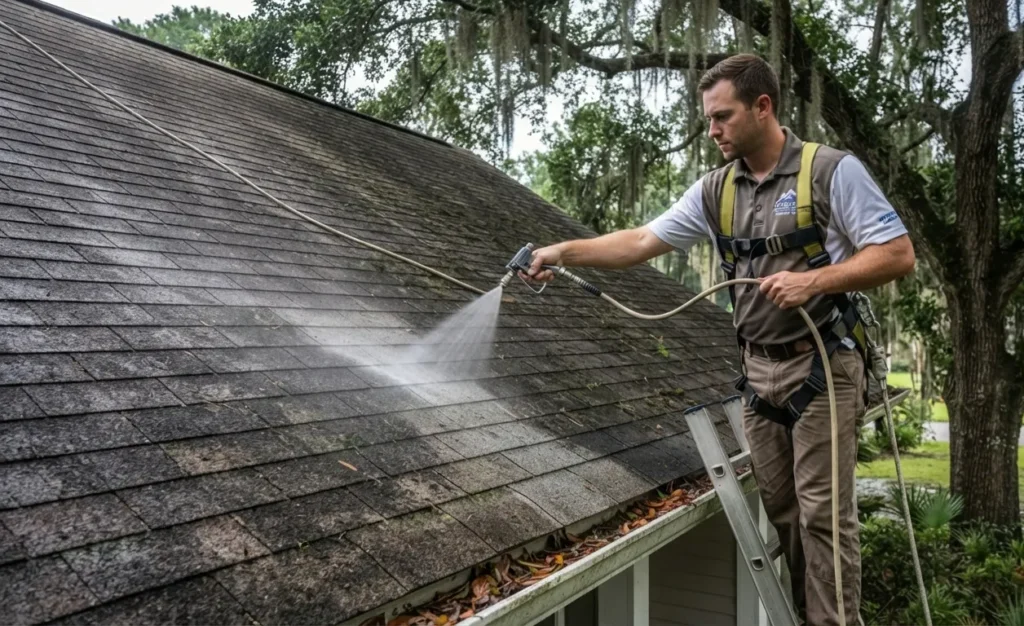
The trouble starts when that same high-pressure force gets pointed at surfaces it was never designed for. Asphalt shingles are especially vulnerable. The granule layer that protects a shingle from UV damage sits right on the surface, and a direct blast of high-pressure water strips those granules away almost immediately. Once that layer is gone, the shingle underneath is exposed to sun damage it was never built to withstand, which is part of why most shingle manufacturers explicitly void warranty coverage when pressure washing is used on a roof.
Siding and painted wood face a similar risk. High pressure can force water behind siding panels, drive moisture into wall cavities, and strip paint down to bare wood. What looks like a fast, satisfying clean in the moment often turns into a repair bill a few months later. For anything involving your home’s exterior siding or painted surfaces, house washing uses the soft wash method specifically to avoid this outcome.
How Soft Washing Actually Kills Organic Growth
Soft washing isn’t just “pressure washing but gentler.” It’s a fundamentally different cleaning method. The solution used in soft washing is formulated to kill algae, moss, mold, and mildew at the cellular level, not just rinse the visible buildup off the surface. That’s the critical distinction homeowners often miss. A pressure washer can knock the surface layer of algae off a roof, but if the root structure or biofilm underneath survives, it regrows within weeks. Soft washing’s dwell time gives the solution enough contact with the organism to actually kill it, which is why a properly soft-washed roof typically stays clean for 18 to 36 months rather than needing to be redone almost immediately.
Side-by-Side Comparison
| Factor | Pressure Washing | Soft Washing |
|---|---|---|
| Typical PSI | 1,300 to 3,000+ | Under 300 |
| Cleaning method | Mechanical force | Chemical solution + dwell time |
| Best surfaces | Concrete, brick, pavers | Roofs, siding, painted wood, stucco |
| Risk to shingles | High, can void warranty | Minimal when done correctly |
| Kills algae at the root | No, surface removal only | Yes |
| Typical results longevity | Weeks to months | 18 to 36 months |
| Surface damage risk | Higher on delicate materials | Low across most exterior surfaces |
Which Surfaces Call for Which Method
Rather than treating this as an either-or decision for your whole property, most professionals use both methods on the same job, just on different surfaces.
- Best suited to soft washing: asphalt shingle roofs, painted siding, stucco, vinyl siding, wood fencing, delicate trim
- Best suited to pressure washing: concrete driveways, brick pavers, sealed patios, commercial parking areas, unpainted masonry
A full exterior cleaning job for a typical Lafayette home often involves soft washing the roof and siding while pressure washing the driveway and walkways in the same visit, which is why bundling services usually makes more sense than hiring separate crews for each surface.
Why the Wrong Choice Costs More Than It Saves
It’s tempting to assume pressure washing is the “stronger” and therefore better option across the board, but stronger isn’t the same as appropriate. The Asphalt Roofing Manufacturers Association specifically warns against high-pressure cleaning methods on shingle roofs because of the granule loss and warranty risk involved. A homeowner who saves a small amount upfront by hiring a generic pressure washing crew for a roof job often ends up paying far more later, either in a shortened roof lifespan or in a denied insurance claim tied to voided manufacturer warranty coverage.
Cost Considerations
Pricing for both methods varies by surface size, condition, and region, but a few patterns hold true almost everywhere. Soft washing tends to run slightly higher per job than a basic pressure wash because of the specialized chemical solutions and longer dwell time involved, but the extended results, often two to three times longer before regrowth, usually make it the better long-term value rather than the more expensive option once you account for how often each method needs to be repeated.
Frequently Asked Questions
Can a pressure washer be used for soft washing?
Technically yes. Most professional soft washing setups start with a standard pressure washer pump but replace the nozzle and regulate the output down to under 300 PSI, then introduce the cleaning solution through the same system.
Is soft washing safe for plants and pets?
Reputable soft washing services use biodegradable solutions formulated to break down safely and minimize harm to landscaping when applied correctly, though plants directly in the runoff path are typically pre-rinsed as a precaution.
Will soft washing remove tough stains like rust or oil?
Not effectively. Soft washing is built for organic growth like algae, mold, and mildew. Rust and oil stains on concrete respond much better to pressure washing.
How do I know which method my contractor is using?
Ask directly what PSI they’ll be using on your roof or siding. Anything above 500 PSI on a shingle roof is a warning sign, regardless of what the company calls the service.
Does soft washing work on metal or tile roofs?
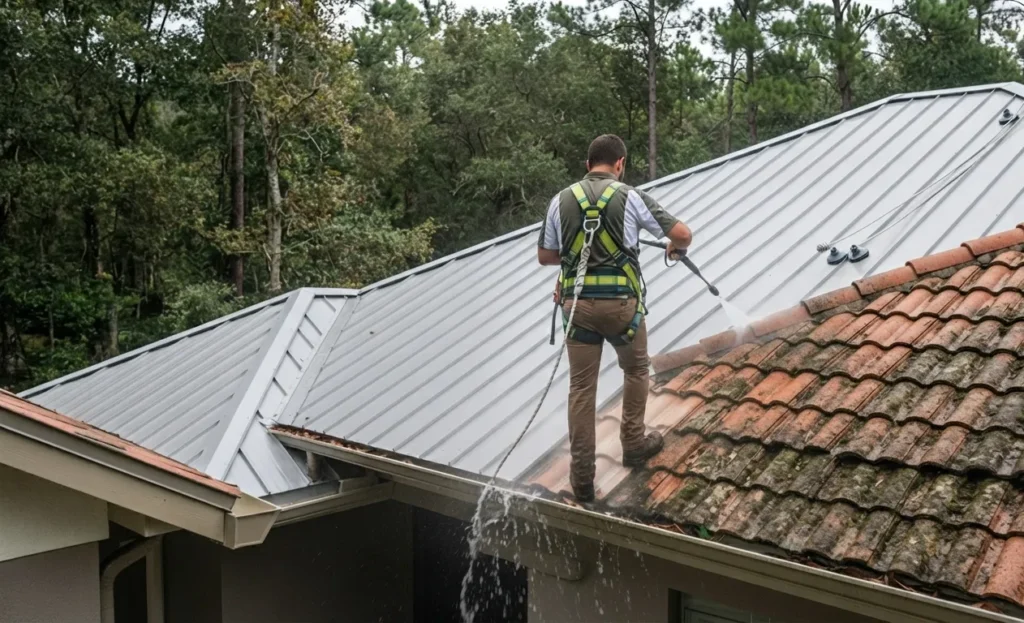
Yes, though the specific solution and dwell time are adjusted based on the roofing material to avoid any risk of discoloration or corrosion.
If you’re not sure which method your property actually needs, contact us for a free assessment. We’ll walk the property, tell you exactly which surfaces need soft washing versus pressure washing, and give you a straightforward quote before any work begins.